The difference between almond vs oval nails is small on paper and obvious on your hands. Both are soft. Both have no corners. One tapers to a gentle peak. The other stays round. That single detail changes how long your fingers look, how much length you need, and how your manicure survives a normal week.
Most guides stop at the silhouette. This one does not. Below is a direct comparison of shape, nail bed fit, durability, upkeep, and finish — plus a simple way to test both shapes before you commit to a full set.
If you are undecided, start with the quick answer. Then check the table. By the end, you will know which shape fits your hands, your length, and your routine — and exactly what to ask for at the salon.
Quick Answer: Choose almond if you have medium length and want the strongest lengthening effect for short fingers or wide nail beds. Choose oval if your nails are short, you type or work with your hands, or you want the lowest upkeep. Almond is the refined statement. Oval is the refined default. When in doubt, start with oval — you can always taper to almond later.

| Almond | Oval | |
|---|---|---|
| Shape | Sides taper inward to a soft, rounded peak, like the nut. | Sides stay fuller, then curve into one smooth, rounded tip. |
| Sidewalls | Filed diagonally inward past the fingertip. | Mostly parallel, with only a slight taper. |
| Length needed | Medium to long. Needs free edge beyond the fingertip to form the peak. | Short to long. Looks complete even with a short free edge. |
| Best for fingers | Short fingers that want maximum elongation; long fingers that want definition. | All finger lengths, especially if you want softness without extra length. |
| Nail beds | Wide beds look slimmer at the tip — if you have the length. | Wide and narrow beds both look balanced, at any length. |
| Length illusion | Strongest. The peak pulls the eye upward. | Gentle. Elongates softly, without changing your proportions. |
| Durability | Lower. The narrow tip is the first point to snag or break. | Higher. No narrow point, so pressure spreads evenly. |
| Maintenance | Higher. Needs precise reshaping every 2 to 3 weeks to stay symmetrical. | Lower. Grows out cleanly and is easy to tidy with a file at home. |
| Best finishes | Nude gloss, French tips, deep red, pearl chrome. | Sheer pink, milky white, burgundy, minimal art. |
| Vibe | Polished, defined, fashion-led. | Clean, natural, timeless. |
Almond Nails: The Elegant Elongator
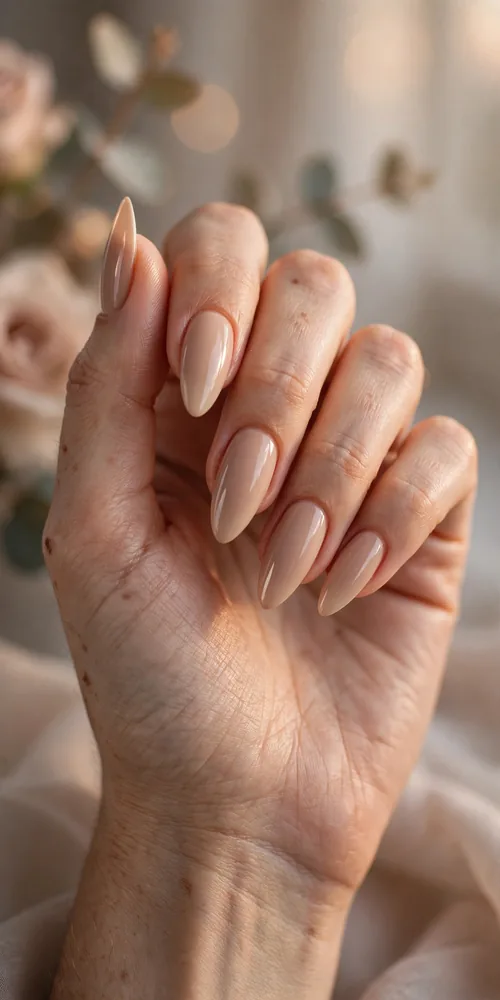
Almond is defined by taper. The sides narrow as they pass the fingertip and meet in a soft peak — never sharp like a stiletto. That line is why the shape lengthens so well. In a glossy nude, there are no hard stops for the eye, so the finger simply looks longer and slimmer.
Who it flatters. Short fingers benefit most. The peak adds visual length where you need it. Wide nail beds also look narrower, because the tip finishes much slimmer than the base. Long, slender fingers can wear almond too, but the effect is different: less correction, more definition. If your nail beds are short and wide, almond can still work — keep the length moderate so the shape stays in proportion.
Length and structure. Almond needs length to exist. Without a free edge that extends past the fingertip, there is nothing to taper, and the result just reads as a narrow oval. Most natural nails need to reach medium length first. If yours will not grow that far, builder gel, hard gel, or a short extension gives the shape its structure. The tip is also the weakest point, so reinforcement matters more here than with any rounded shape.

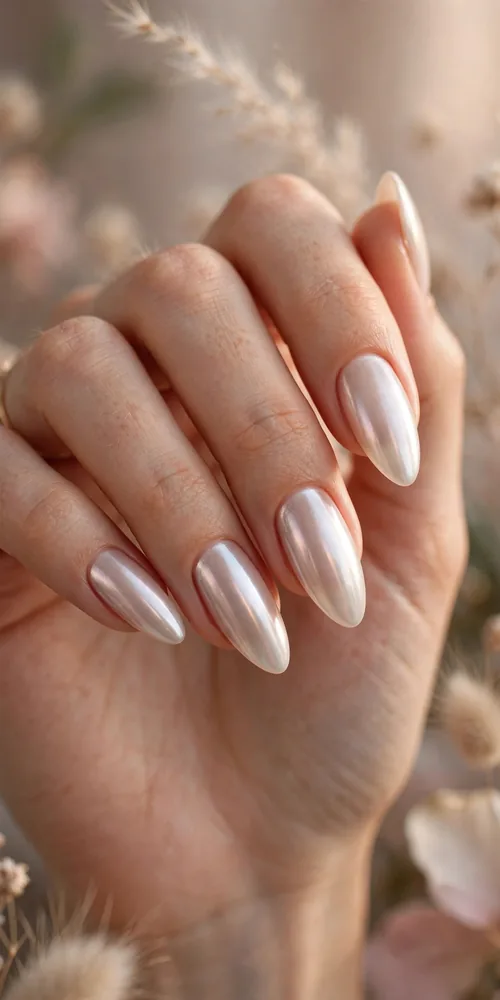
Best finishes. The long canvas suits clean, graphic finishes. A classic French tip follows the taper and looks precise. Deep red gains intensity on the narrower tip. Pearl chrome and glazed finishes catch light along the tapered sides, which is why they photograph so well on almond.
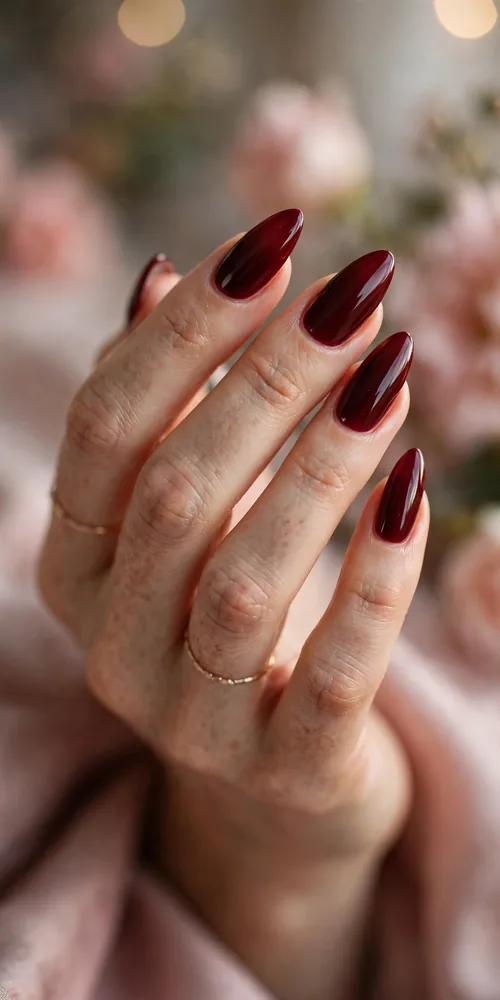
Upkeep, honestly. Expect more. Symmetry is the whole shape, and symmetry is lost as nails grow at slightly different rates. Plan on reshaping every two to three weeks. File gently from the sides, never clip the peak, and use cuticle oil daily. If you type all day, a medium almond is the practical limit — long almond tips click, catch, and tire quickly.
Oval Nails: The Natural Classic
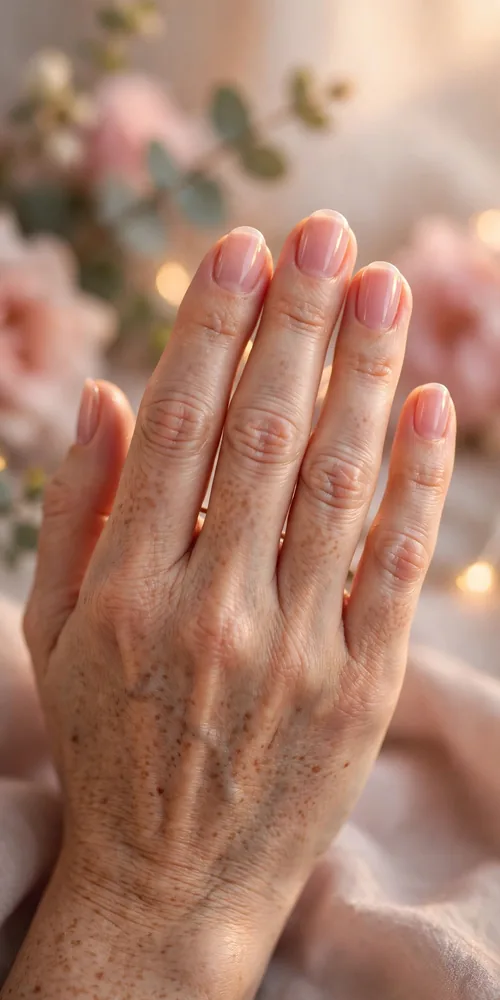
Oval is defined by continuity. The sidewalls stay mostly parallel, then round into a single smooth curve that mirrors your fingertip and, ideally, your cuticle line. In sheer pink, the effect is simple: your nail, only neater. No peak. No drama. Nothing to explain.
Who it flatters. Almost everyone. Short fingers get a gentle lengthening effect without needing extra length. Long fingers look softer and more balanced. Wide nail beds look calm and proportionate, because oval does not pinch the tip inward — it lets the bed keep its natural width and finishes it cleanly. Narrow beds look elegant too. Oval is the one shape that rarely needs a caveat.
Length and durability. Oval works at the length you already have. It looks intentional on short natural nails, which almond cannot honestly claim. The rounded tip is also the practical advantage: with no narrow point, there is no single stress spot to catch on fabric, keyboards, or packaging. That is why oval chips less, snags less, and suits typing, childcare, and hands-on work.
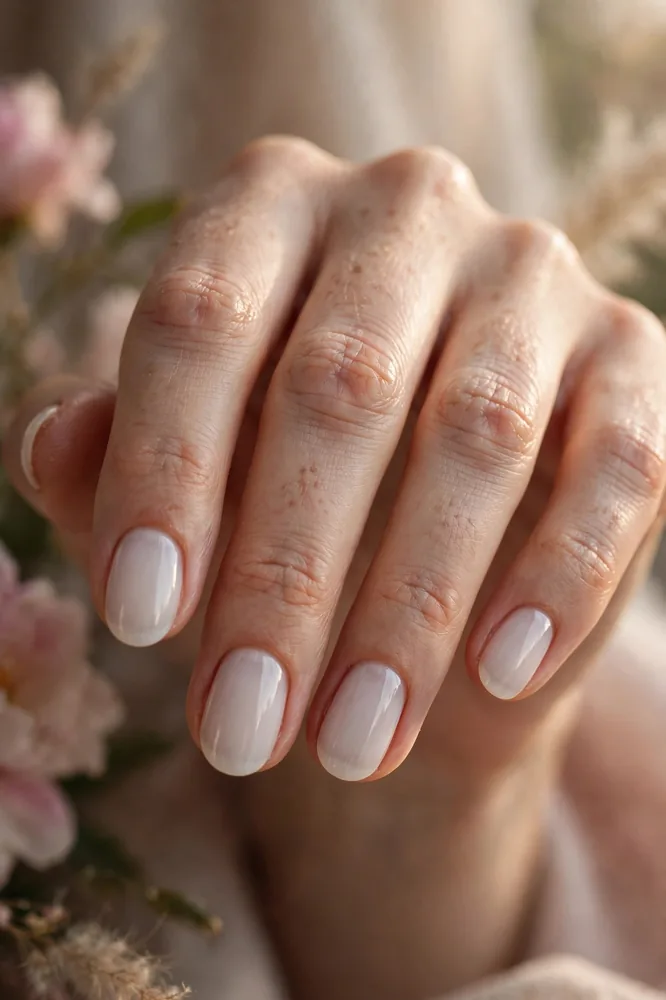
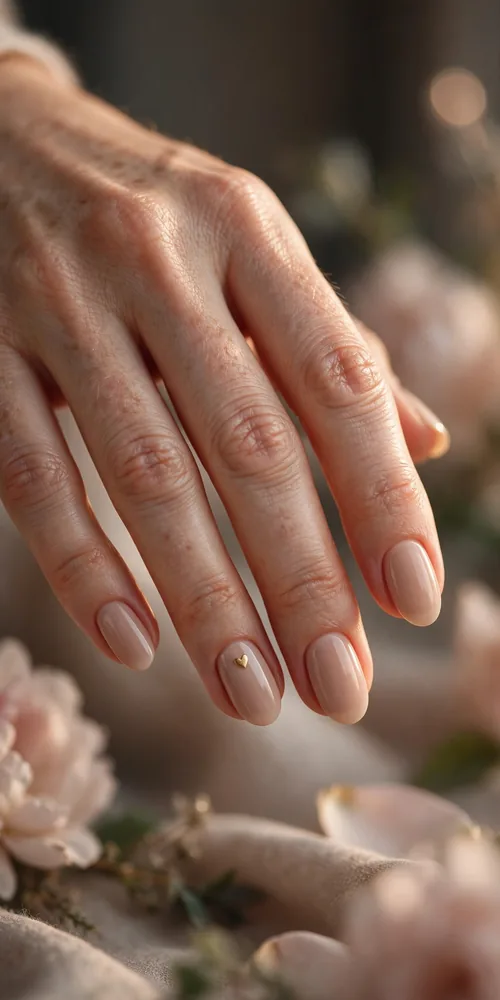
Best finishes. Oval rewards restraint. Milky white and sheer tints keep the shape looking fresh and expensive. Burgundy is the deeper option — rich, but still soft at the edges. Minimal art works best of all: a fine line, a tiny heart, a single gold detail. On this canvas, less always reads as more.
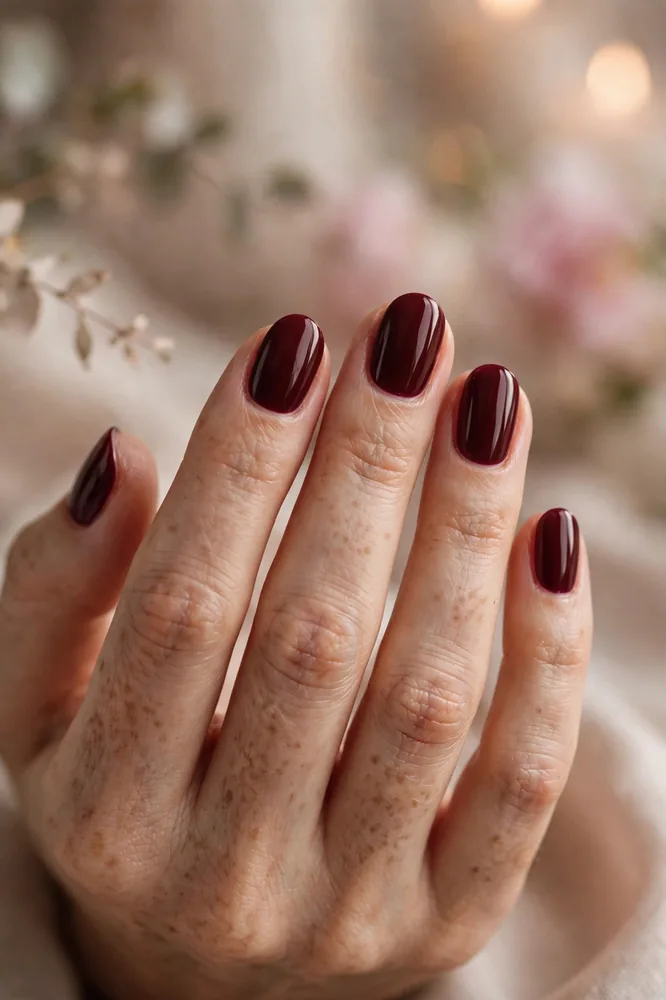
Upkeep, honestly. Minimal. Oval grows out gracefully because the curve does not distort as quickly as a taper does. A light file at home keeps the edge smooth between appointments. Regular gel polish on natural nails is usually enough — no reinforcement required unless your nails are naturally thin.
Almond vs Oval: Side-by-Side Differences

- The tip. Almond closes to a soft peak. Oval stays open and round. This is the whole difference — everything else follows from it.
- The sidewalls. Almond sidewalls angle inward. Oval sidewalls run straighter. More filing inward means a slimmer tip, and a more fragile one.
- The length they need. Almond needs a medium free edge at minimum. Oval is complete at short length. If your nails are short today, oval is the honest choice today.
- The elongation effect. Almond lengthens strongly. Oval lengthens gently. For short fingers, that difference is visible in photos and in person.
- Durability in daily life. Oval wins. Its even curve has no weak point. Almond’s peak is where breaks begin, especially without builder gel or acrylic support.
- The nail art canvas. Almond gives you more surface and a directional shape — ideal for French tips, ombré, and chrome. Oval gives you a softer surface — ideal for sheers, milky tints, and minimal art.
- Grow-out. Oval hides grow-out and is forgiving if you miss an appointment. Almond shows asymmetry quickly and needs a skilled reshape to restore the taper.
Which Shape Should You Choose?
Decide by hand first, routine second, taste last.
By finger length. Short fingers: choose almond if you can wear medium length — the elongation is real. If you cannot, choose oval and keep the polish sheer or nude; color can lengthen when shape cannot. Long fingers: both work. Choose oval for balance, almond for definition.
By nail bed width. Wide beds: oval is the safe choice at any length. Almond is the slimmer-looking choice, but only once you have enough length to taper without weakening the sides. Narrow beds: both flatter. Almond adds elegance; oval keeps things effortless.
By routine. If you type for hours, lift, cook, or care for children with your hands, choose oval. It will cost you less in breaks and repairs. If your routine is gentle and you enjoy salon upkeep, almond will repay the effort every time you look at your hands.
Still unsure? Test one nail. Ask your technician to shape a single nail each way, or try press-ons in both shapes for a few days. Live with them. Type with them. The right shape stops being a debate within 48 hours — it just feels like yours.
More Nail Ideas You’ll Love
Almond vs Oval Nails FAQs
What is the main difference between almond and oval nails?
The tip and the sidewalls. Almond nails taper inward and finish in a soft, rounded peak. Oval nails keep fuller, mostly parallel sidewalls and finish in a smooth, rounded curve. Almond therefore looks longer and more defined, while oval looks softer, more natural, and works at shorter lengths.
Which lasts longer, almond or oval nails?
Oval nails last longer. The rounded tip has no narrow point to catch or crack, so pressure spreads evenly across the edge. Almond’s tapered peak is the weakest part of the nail and chips sooner, especially on natural nails without builder gel, hard gel, or acrylic reinforcement.
Which shape makes short fingers look longer, almond or oval?
Almond makes short fingers look longer. The tapered sides and soft peak draw the eye upward in one unbroken line, so fingers appear visibly longer and slimmer. Oval also flatters short fingers with gentle elongation, but the effect is softer. A sheer nude polish strengthens the effect on either shape.
Can you get almond nails on short natural nails?
Only a mild version. Almond needs a free edge that extends past the fingertip so the sides have room to taper. On short natural nails, the taper is too subtle to read as almond. Grow the nails to medium length first, or use builder gel, extensions, or almond press-ons to get the true shape.
Can you reshape oval nails into almond, or almond back to oval?
Yes, both ways. Oval to almond requires enough length: the technician files the sidewalls inward to form the peak. Almond back to oval is simpler — the peak is filed down into a smooth curve. You can always go rounder. You cannot go more tapered without length to spare.
Final Verdict
There is no better shape. There is only the better fit. Almond is length, definition, and intent — choose it when you have the length and want your fingers to look longer. Oval is ease, balance, and permanence — choose it when you want a shape that works at any length, on any day, without negotiation. Start with the shape your life supports. That is the minimalist rule, and it never fails.
One Response