Side french tip nails relocate the classic French line: instead of a smile line straight across the free edge, the color runs diagonally or curves down one sidewall of the nail. We recommend it constantly in salon work: it delivers visible nail art while keeping most of the nail clean, sheer, and professional.
That placement is functional, not just aesthetic. A diagonal line draws the eye along the nail bed, so short nails look longer. It also grows out gracefully: because the color sits to one side rather than across the entire tip, cuticle regrowth is far less obvious than with a traditional French.
Below are 25 side french tip nails we would confidently put on a salon menu, from the classic white sweep to chrome, leopard, and two-tone designs. Each entry notes the finish, the shape it suits best, and the wear considerations that matter — so you know precisely what to book.
Quick Answer: Side french tip nails move the classic French line off the tip and run it diagonally or in a curve down one sidewall of the nail. In salon practice, white, black, gold chrome, and pastel side sweeps are requested most. The diagonal visually lengthens short nails, works on almond, oval, and squoval shapes, and holds up best in gel.
Jump to Your Favorite Side French Tip Nail Idea
- Classic White Side Sweep
- Black Diagonal Slash
- Gold Metallic Side Arc
- Double Line Side French
- Blush Pink Diagonal
- Chrome Silver Side
- Burgundy Wine Side
- Half-Moon Side Curve
- Neon Coral Side
- Sage Green Diagonal
- French Fade Ombre Side
- Leopard Print Side Edge
- Red Diagonal Side
- Cobalt Blue Curved Side
- Pearl White Shimmer Side
- Two-Tone Split Side
- Lavender Lilac Side
- Copper Metallic Slash
- Nude Black Outline Side
- Hot Pink Side
- Emerald Green Side
- Confetti Dot Side
- Negative Space Minimal Side
- Pastel Rainbow Side
- Glitter Fade Side
1. Classic White Side Sweep
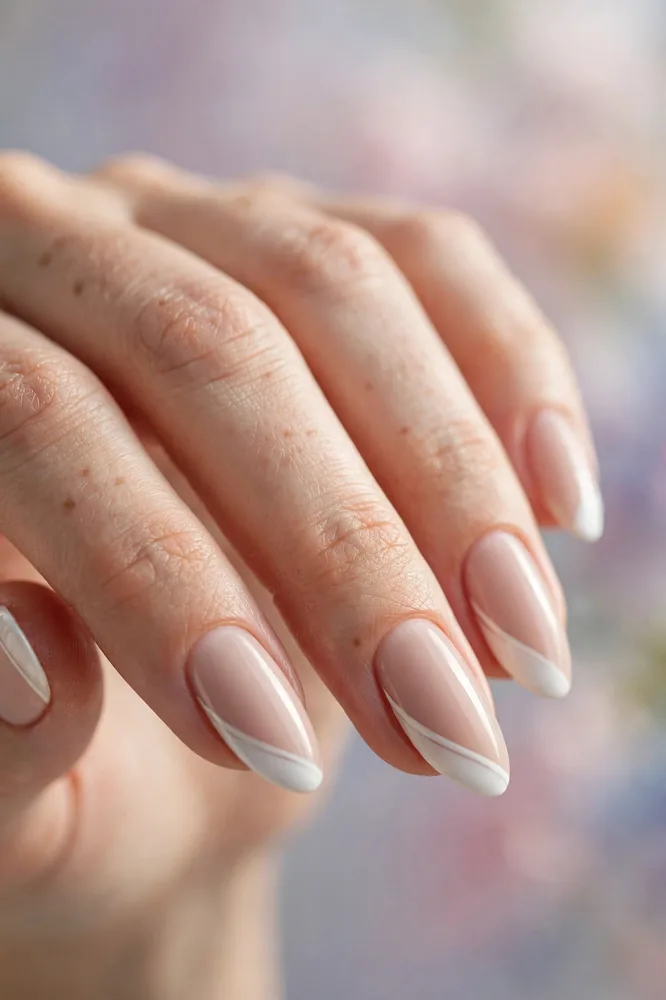
The reference design: an opaque white gel line swept diagonally over a sheer nude or milky pink base. It works on every shape, but it is most flattering on short squoval and medium almond nails. Request a fine liner brush and glossy top coat; in gel, expect 2–3 weeks of wear.
2. Black Diagonal Slash
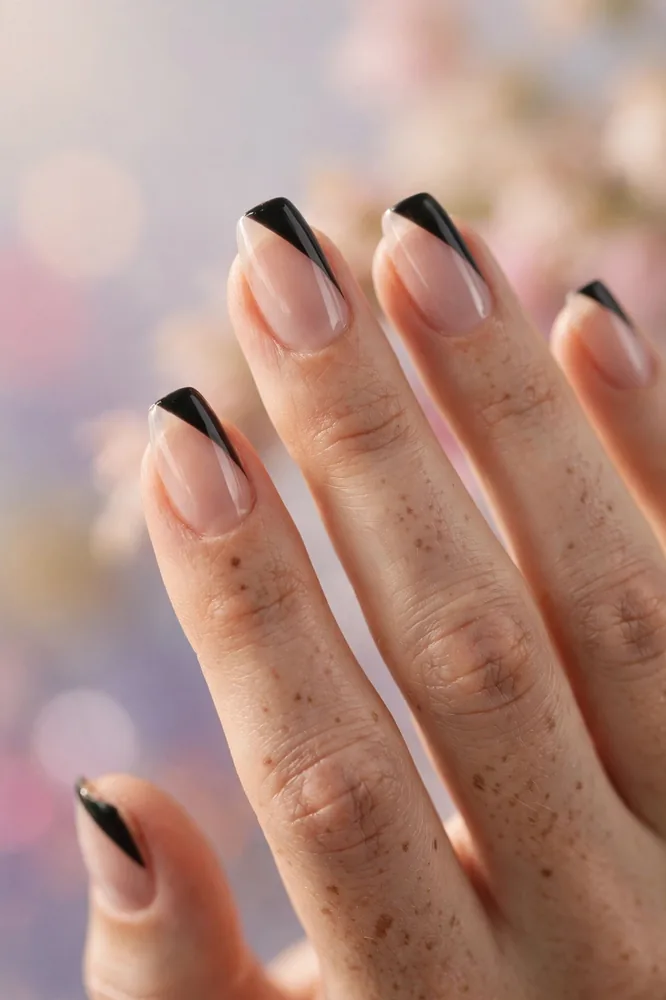
A single jet-black diagonal over a transparent or nude base gives maximum contrast with minimum product. Keep the line thin — thick black reads heavy on short nails. It pairs best with almond and coffin shapes and a high-shine finish.
3. Gold Metallic Side Arc
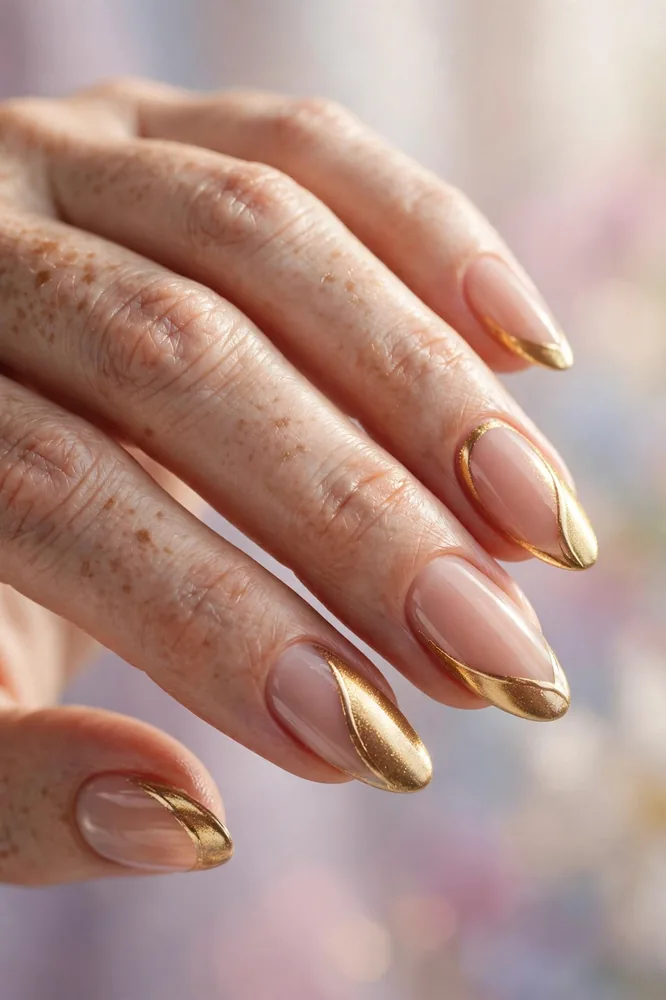
A curved gold metallic arc along one sidewall functions as built-in jewelry. Technicians achieve this with gold chrome powder rubbed over a cured gel line, or with metallic gel paint for a sharper edge. It suits weddings, festive events, and warm skin tones. Seal chrome thoroughly at the free edge to prevent early wear.
4. Double Line Side French
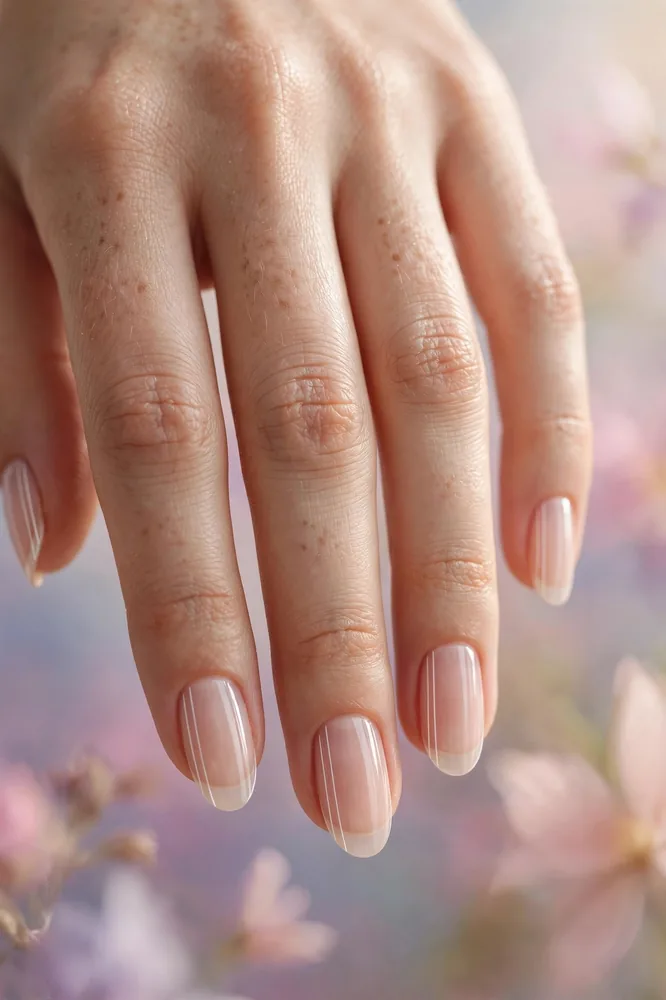
Two parallel white lines with a channel of base color between them create a graphic, architectural effect. This needs a steady hand and a long striping brush, so book an experienced nail artist. It reads best on medium to long nails, where both lines can stay distinct.
5. Blush Pink Diagonal
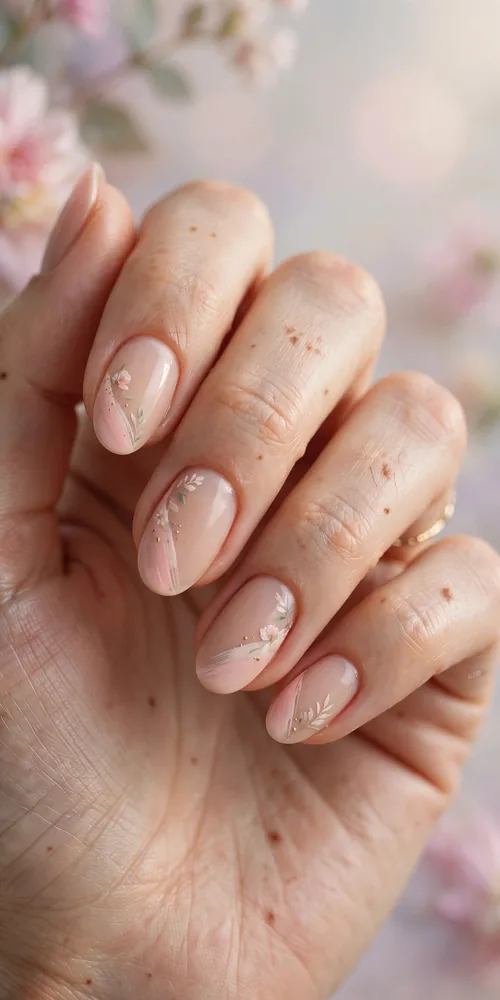
A soft blush or rose pink diagonal is the lowest-contrast option on this list, which makes it ideal for conservative workplaces and first-time French clients. Use a pink two to three shades deeper than your base so the line stays visible. It flatters fair to medium skin tones and short oval nails.
6. Chrome Silver Side
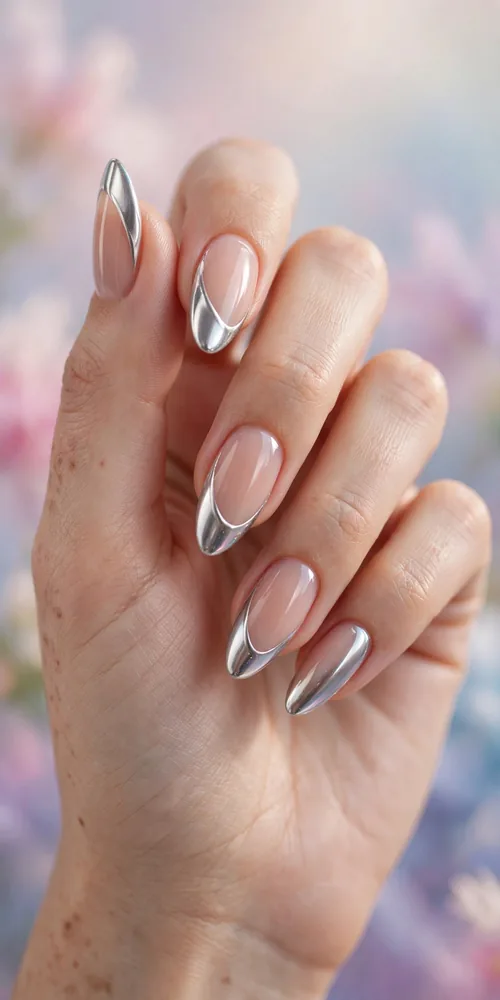
Silver chrome applied along one side produces a mirror finish that is currently one of the most saved side French variations on Pinterest. The process is gel-only: paint the line, cure, apply no-wipe top coat, then rub in the chrome powder. Best on almond nails, for parties and New Year events.
7. Burgundy Wine Side
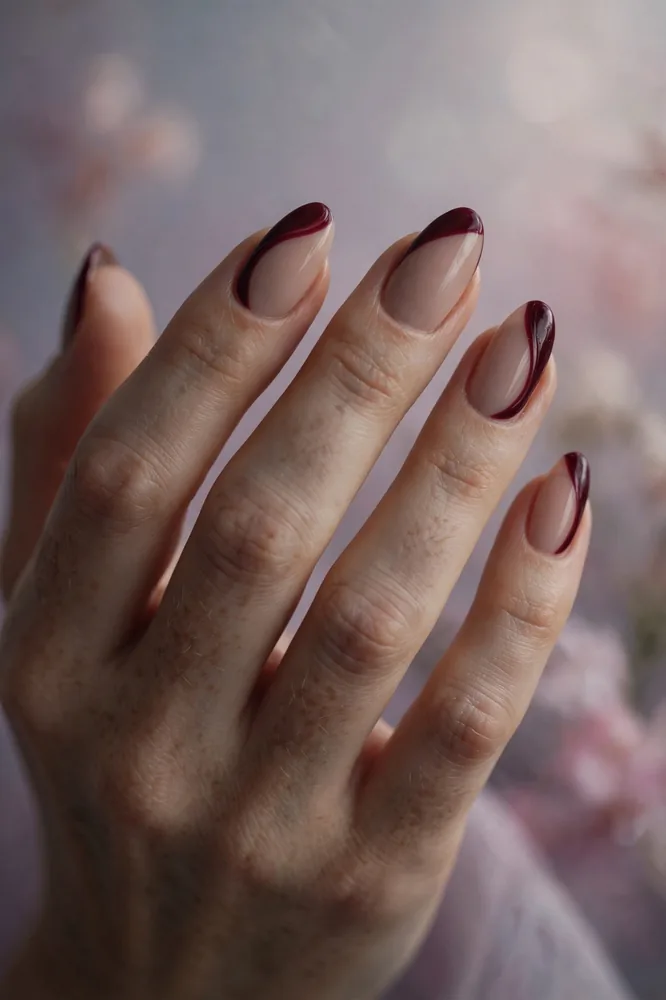
A deep burgundy or wine-red side sweep is the definitive autumn and winter version. Dark pigments stain easily, so apply a quality base coat and clean the sidewalls before curing. This shade suits all skin tones and looks expensive on short square nails.
8. Half-Moon Side Curve
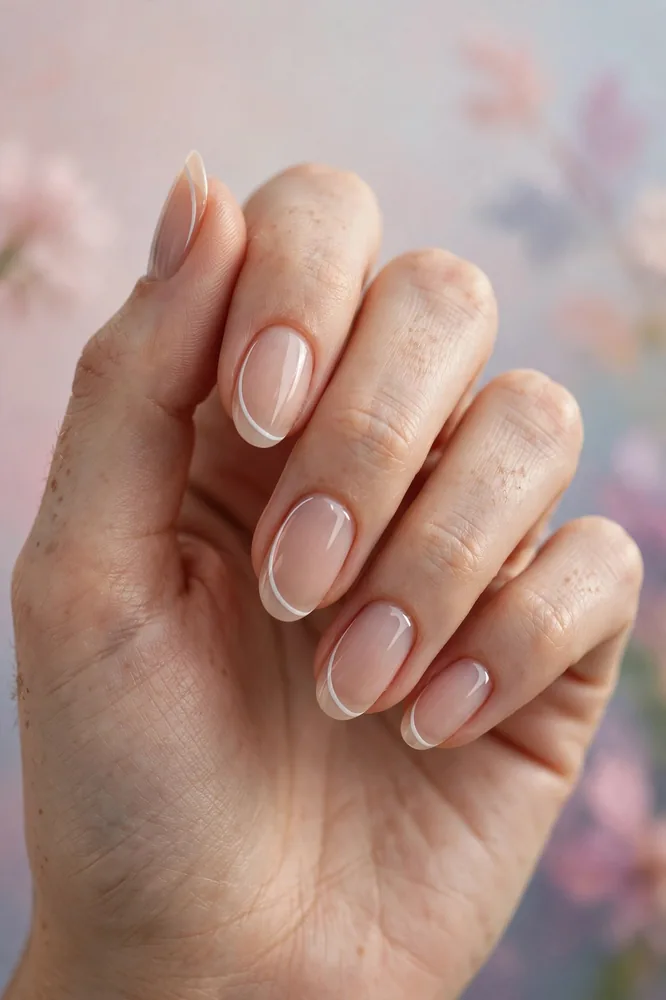
Here the white follows a crescent curve down one side rather than a straight diagonal — a softer, more organic line. It is forgiving to apply, making it a good DIY step up from the classic sweep. Keep the crescent thin on short nails to avoid crowding the nail bed.
9. Neon Coral Side
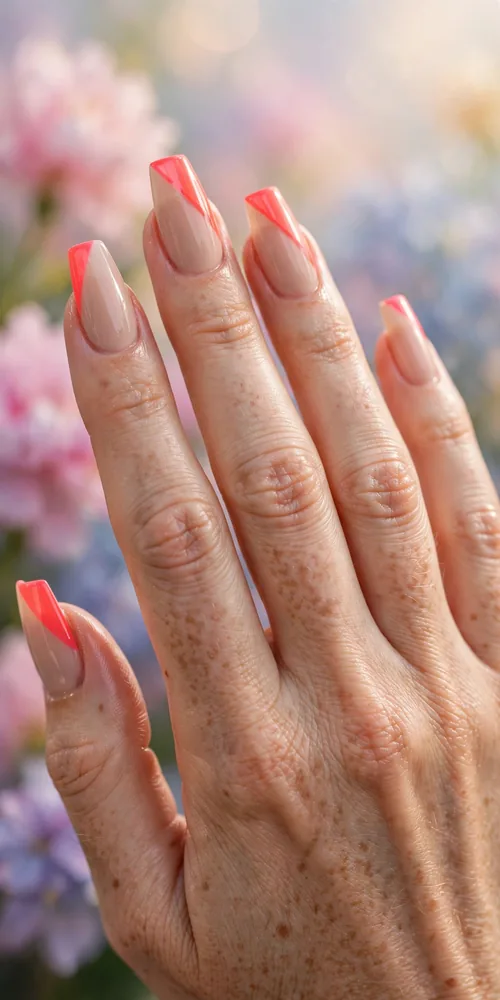
Neon coral delivers summer color without committing to a full neon nail. Neon pigments apply streaky, so expect two to three thin coats over a white underlay for true brightness. It flatters medium to deep and tanned skin best.
10. Sage Green Diagonal
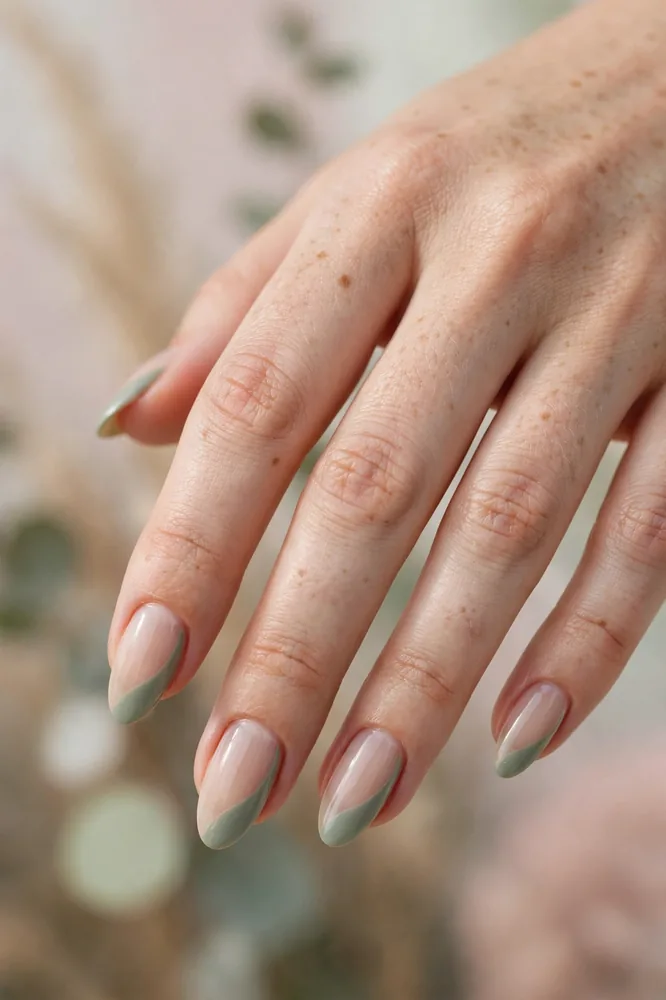
Muted sage is the most wearable green for a side French: earthy, low-contrast, and appropriate year-round. It is frequently requested by clients who want color that still reads neutral. Sage works on every shape; choose a glossy finish, as matte can make it look flat.
11. French Fade Ombre Side
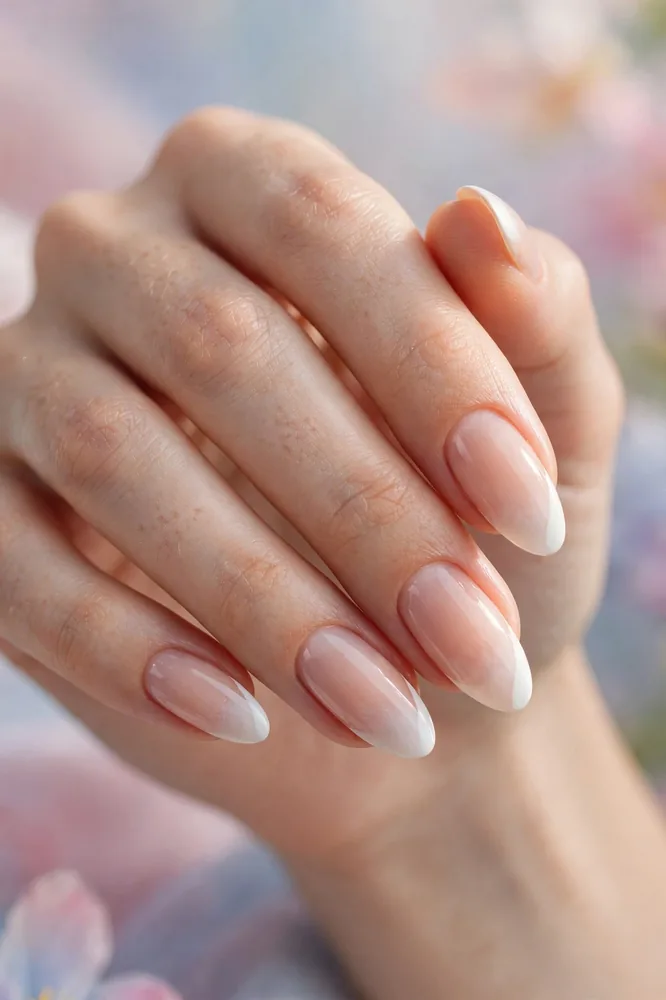
Also called a baby boomer side French, this version blends white into the nude base with no hard line, concentrated along one side. Created with a sponge or ombre brush, it is the best option if grow-out visibility is your main concern — there is no defined edge to date the manicure. Ideal for brides and professionals.
12. Leopard Print Side Edge
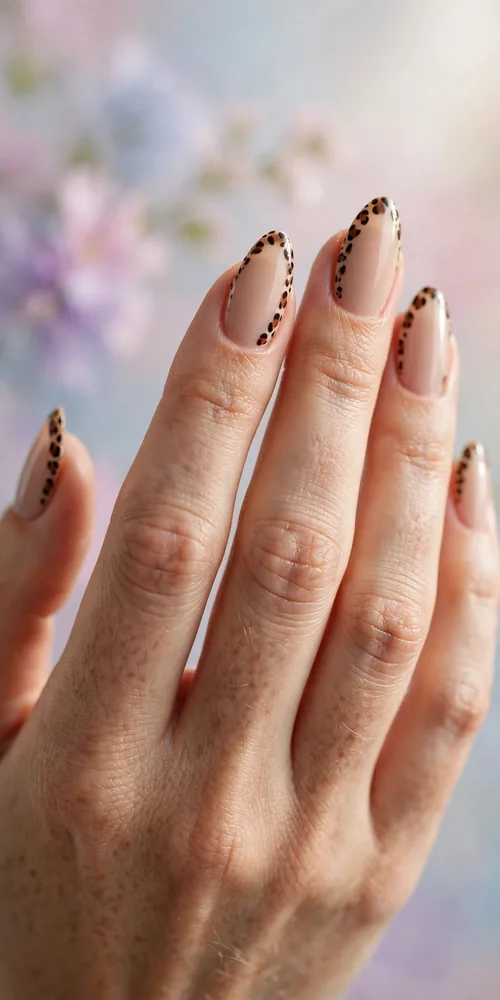
Confining leopard spots to the side tip keeps animal print controlled and wearable. The spots are hand-painted in tan and brown, then outlined irregularly in black — no two nails should match exactly. This is advanced nail art, so allow extra appointment time.
13. Red Diagonal Side
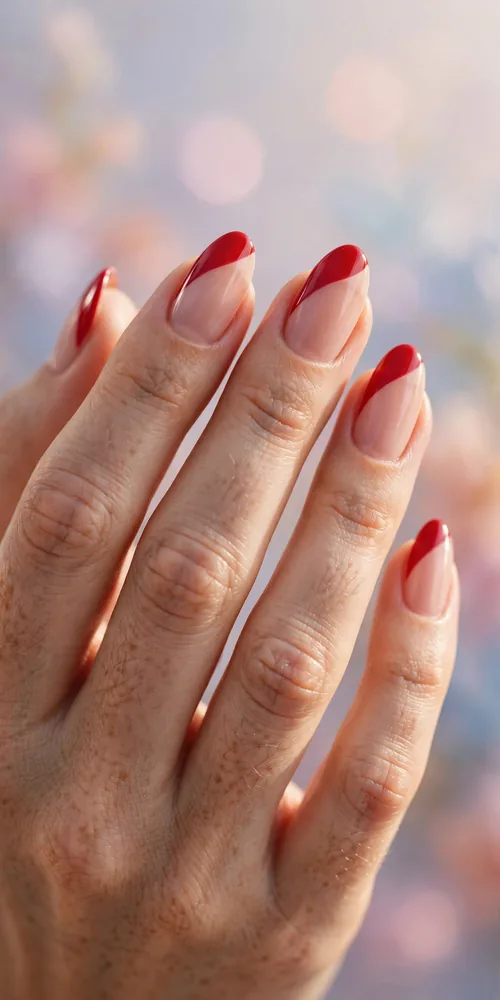
A true red diagonal is the classic red manicure updated: all of the impact, a fraction of the surface area. Use a blue-based red for fair skin and an orange-based red for warm or deep skin. Because red pigment bleeds, flash-cure each nail before moving on.
14. Cobalt Blue Curved Side
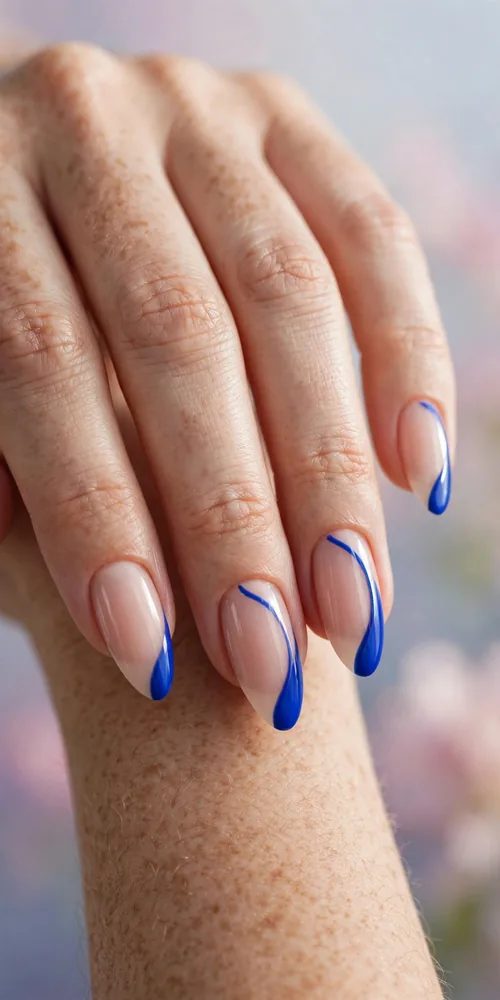
Cobalt is a high-saturation shade that needs a clean nude base to look intentional rather than accidental. The curved placement softens its intensity. It photographs exceptionally well and is a frequent vacation request. On short nails, ask for a narrower curve so the blue does not dominate.
15. Pearl White Shimmer Side
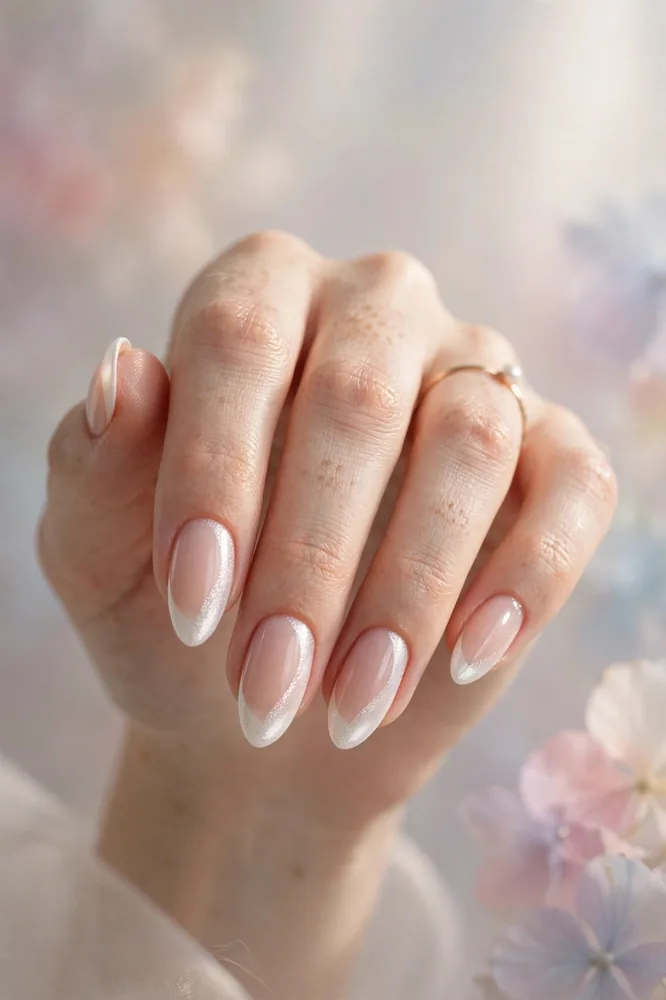
A pearlescent white with a glazed, chrome-powder finish — the side French answer to glazed donut nails. The shimmer diffuses light, which disguises minor imperfections in the line. This is our top recommendation for brides and formal occasions, on oval and almond shapes.
16. Two-Tone Split Side
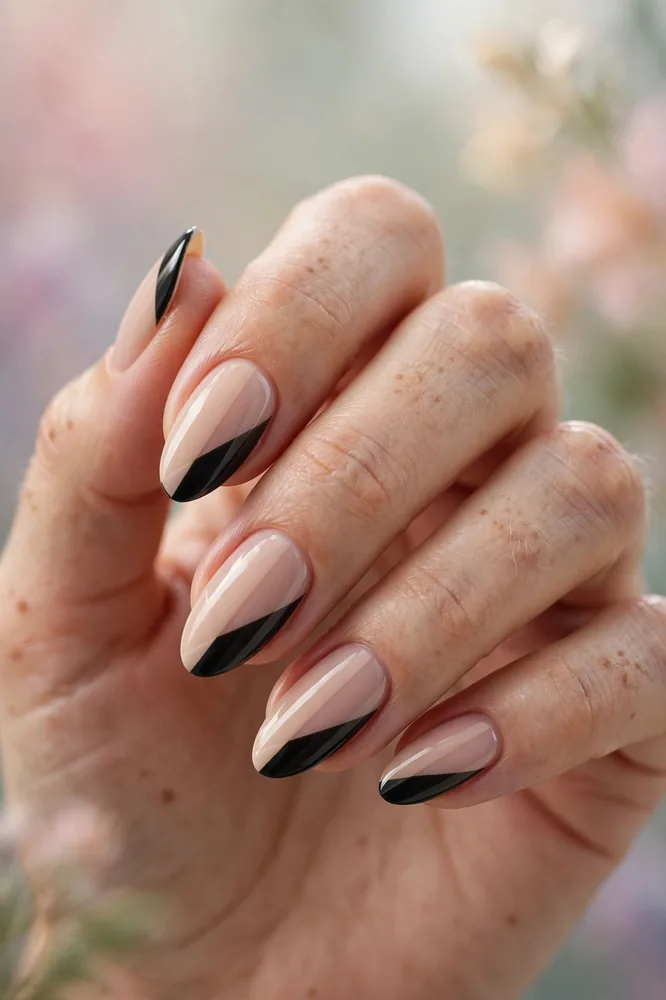
Beige on one half of the diagonal, black on the other: a split design that requires precise taping or a very confident freehand. The contrast is graphic, so keep the rest of the nail bare. Best reserved for medium to long nails, where the split has room to read clearly.
17. Lavender Lilac Side
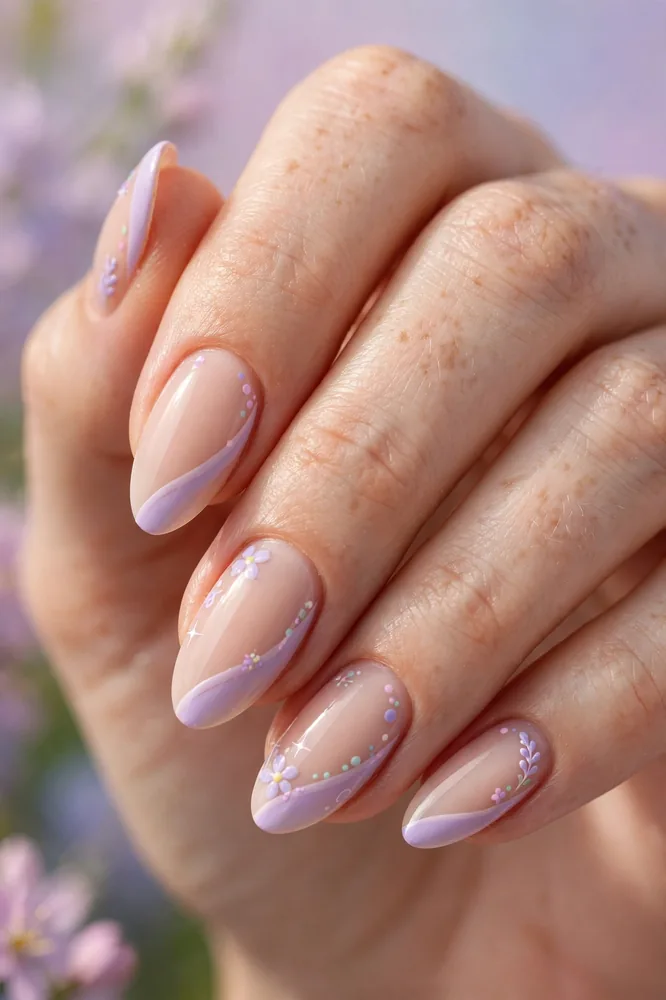
Lavender and lilac pastels are core spring requests, and the side placement keeps them from looking juvenile. Pastel gels can be patchy, so two thin coats beat one thick one. This shade family flatters cool and neutral skin tones.
18. Copper Metallic Slash
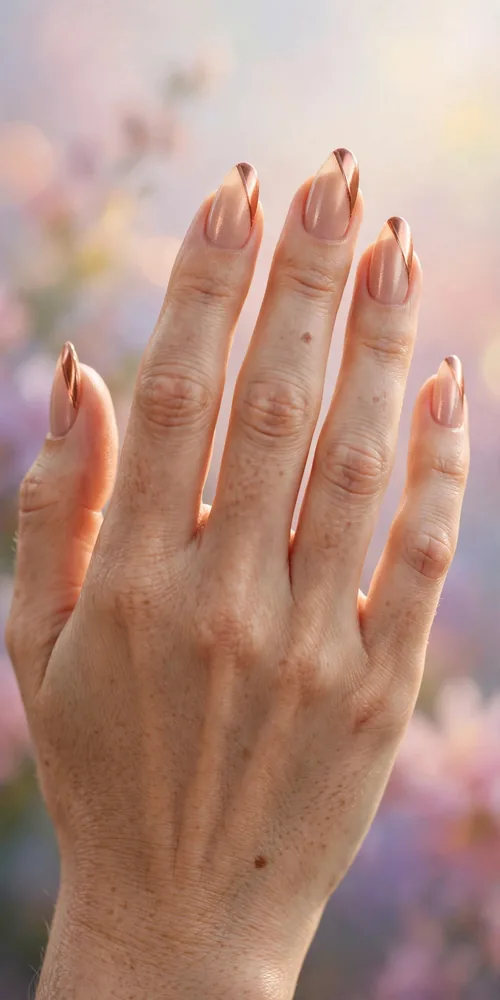
Copper is the warm-metal alternative to gold and silver, and it is particularly flattering on warm and olive skin tones. As a straight metallic slash it reads modern rather than decorative. As with all chromes, edge-capping is essential — metallic finishes show tip wear first.
19. Nude Black Outline Side
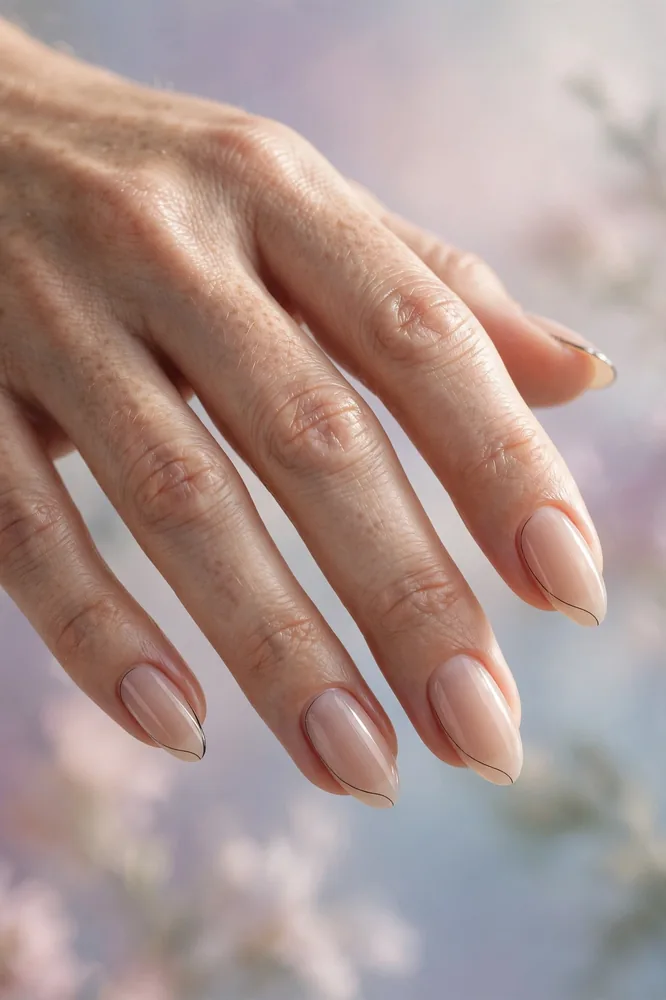
The most minimal design here: a nude nail with only a fine black outline tracing the side curve, with no fill. This is precision work — the line must stay consistent across all ten nails. An excellent choice for clients who need nail art that stays appropriate in formal professional settings.
20. Hot Pink Side
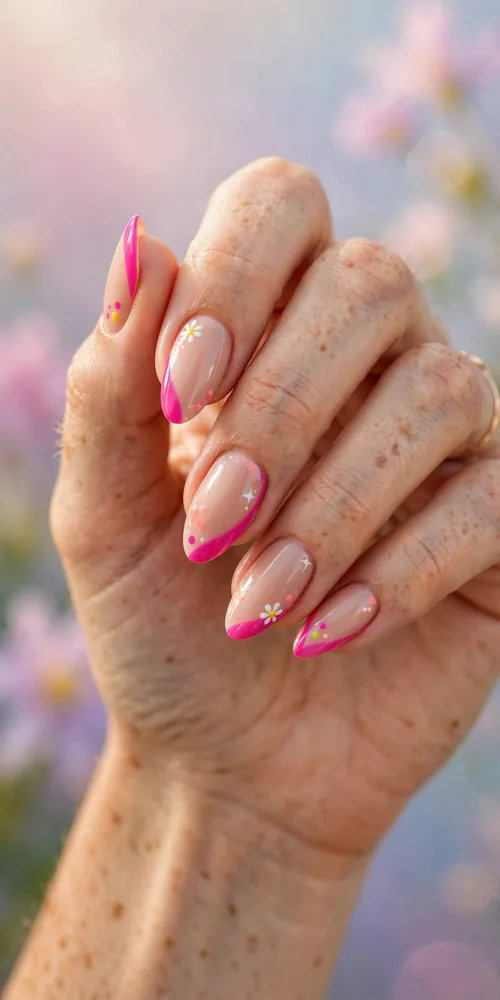
A saturated hot pink side sweep is a high-energy summer and party option that still leaves most of the nail neutral, so it never overwhelms an outfit. It suits all skin tones, with deeper skin carrying the brightness especially well. Choose gel to keep the color vivid beyond the first week.
21. Emerald Green Side
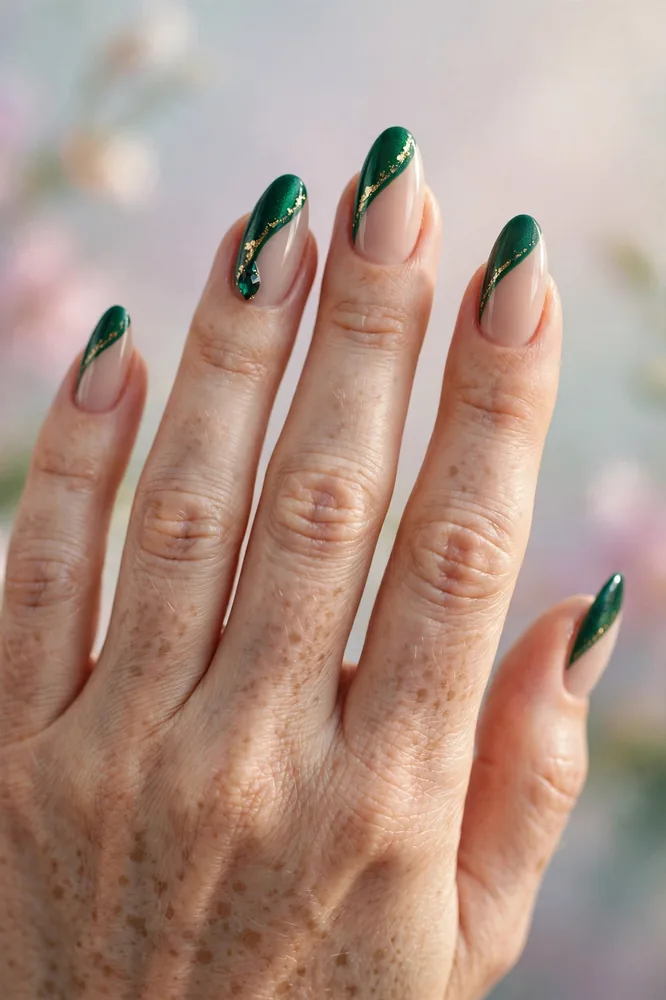
Emerald is the jewel-tone option for winter and evening wear. Its depth means one well-pigmented coat is usually sufficient, which keeps the line crisp. Keep it glossy to preserve the gem-like quality — matte emerald can read muddy.
22. Confetti Dot Side
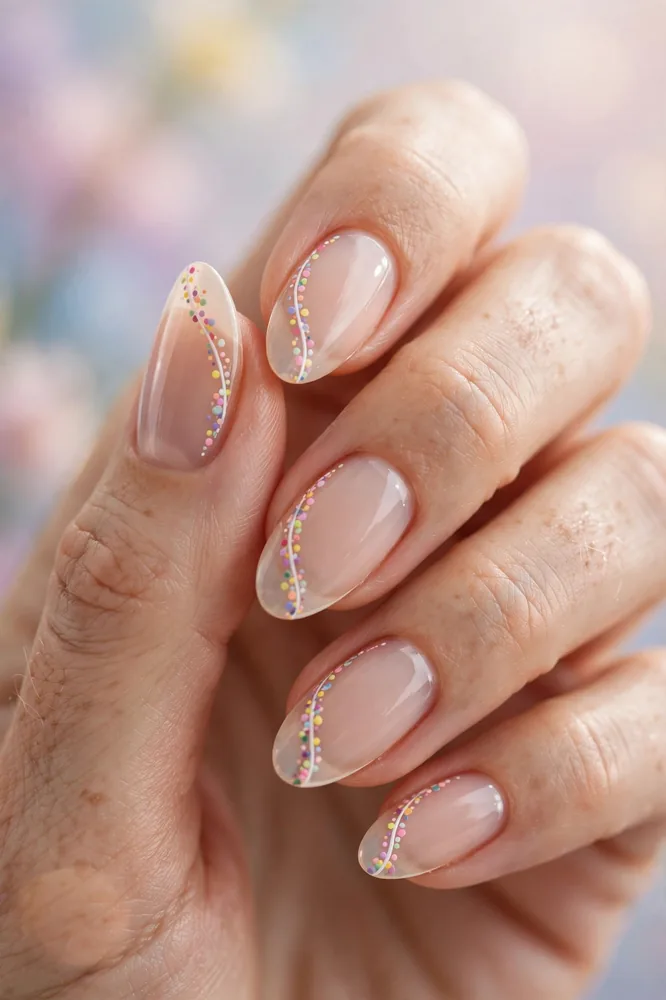
Instead of a solid line, small multicolored dots follow the side curve, applied with a dotting tool in graduated sizes. This is the easiest design here to reproduce at home, because dots need no brush control. Keep the base sheer so the dots remain the focus.
23. Negative Space Minimal Side
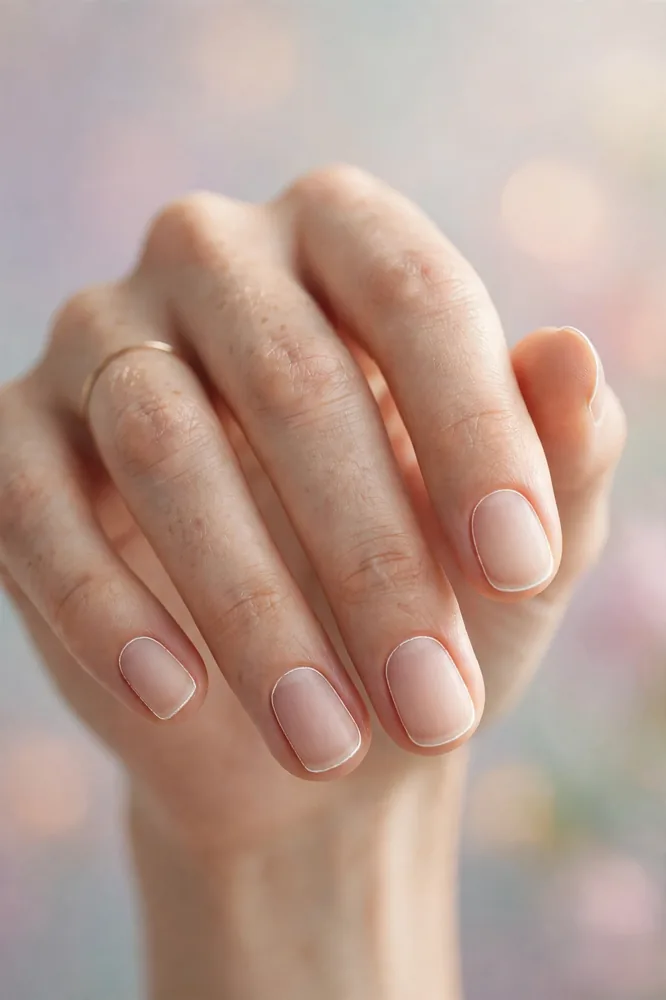
A single hair-thin white line on an otherwise bare, natural nail. Negative space has one practical advantage: grow-out is virtually invisible, so this manicure lasts longest between appointments. Nail health must be good, however — with no base color, ridges and discoloration will show. A ridge-filling base coat helps.
24. Pastel Rainbow Side
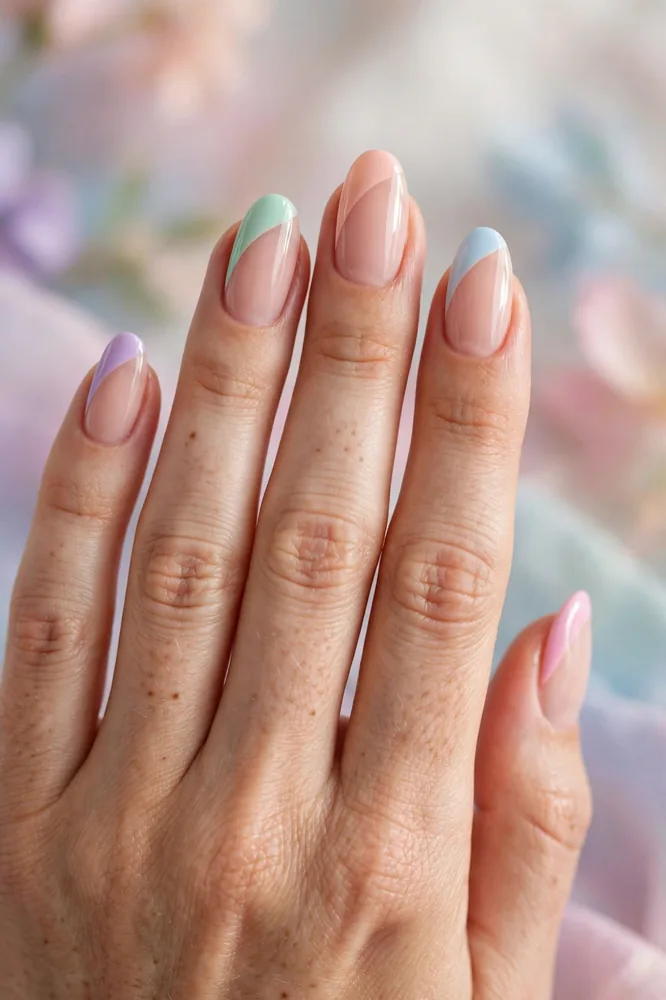
A different pastel on each nail — lavender, mint, peach, baby blue, and rose — each swept along the same side for consistency. Using one shade family and one line placement keeps a multi-color set cohesive. A leading spring and Easter request, it works surprisingly well on short nails.
25. Glitter Fade Side
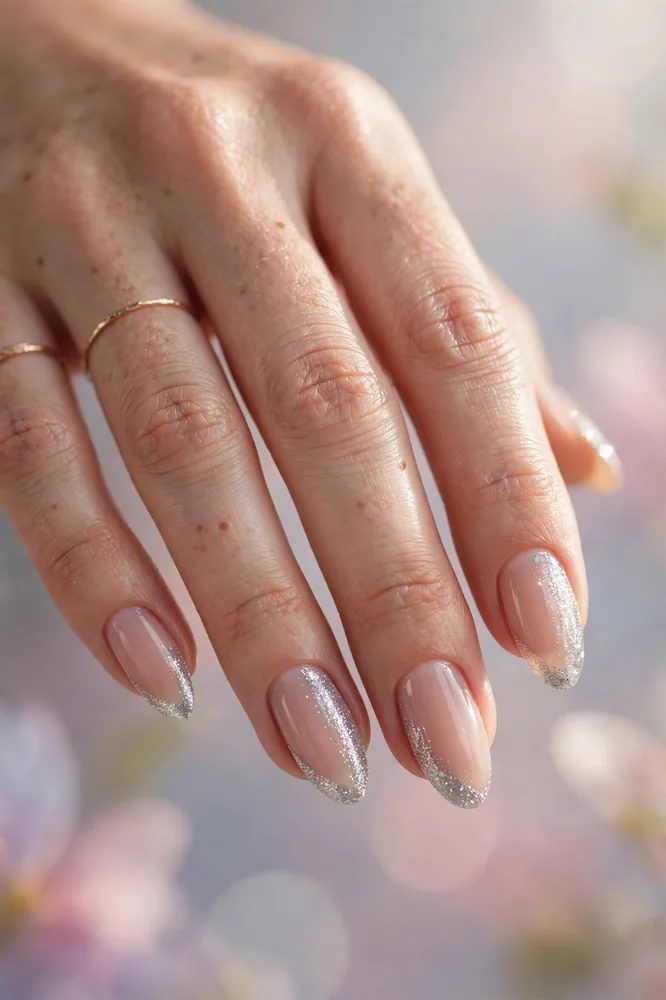
Silver glitter concentrated at the side edge and faded out into the nude base, applied with a dry brush or sponge for a gradient rather than a hard line. The standard recommendation for prom, parties, and New Year. Use a peel-off base coat under glitter if removing it at home — glitter removal is otherwise slow.
More Nail Ideas You’ll Love
Side French Tip Nail FAQs
Are side french tip nails hard to do for beginners?
No. The classic side French is one of the most beginner-friendly French variations because the line is freehand and asymmetrical, so small imperfections are not obvious. Start with a fine liner brush, rest your wrist on a stable surface, and practice the stroke on paper or a press-on nail first.
What colors work best for side french tip nails?
White and black give the strongest, most versatile contrast against a nude base. Beyond those, metallics such as gold, silver chrome, and copper, jewel tones like burgundy and emerald, and pastels including lavender and sage are the most requested in salons. Choose a line color at least two shades deeper than your base so it stays visible.
Can you do side french tips on short nails?
Yes, and they are often more flattering on short nails than a traditional French. The diagonal line draws the eye along the length of the nail bed, creating a lengthening effect. Keep the line thin and positioned close to one sidewall, and avoid wide double-line or split designs, which need more surface area.
How do I get a clean, crisp side line?
Use a long, fine striping brush loaded with very little polish, and draw the line in one continuous stroke from the sidewall near the cuticle toward the tip. Work with gel polish if you can — it does not dry mid-stroke, so you can correct the line with a clean brush and alcohol before curing.
How long do side french tip nails last?
In regular polish, expect 5 to 7 days with a good base and top coat. In gel, a side French typically lasts 2 to 3 weeks, and it ages better than a standard French because the colored section sits to one side, making cuticle grow-out far less noticeable between appointments.
Final Thoughts
Side french tip nails succeed because the technique is simple and the variables are endless: one diagonal or curved line, in any color or finish, on any shape. For a salon appointment, bring a photo, specify the line placement and whether you want it mirrored across both hands, and choose gel for longest wear. At home, start with the Classic White Side Sweep or the Confetti Dot Side — both are achievable on the first attempt.